1. Introduktion
The ESBE VTC500 series thermal loading valves are designed to protect boilers from excessively low return temperatures. By maintaining a high and stable return temperature, the valve significantly increases boiler efficiency, prevents tar formation, and extends the overall lifespan of the boiler. This makes the system more effective and durable. The VTC500 series valves are suitable for heating applications up to 150 kW, particularly with solid fuel boilers.
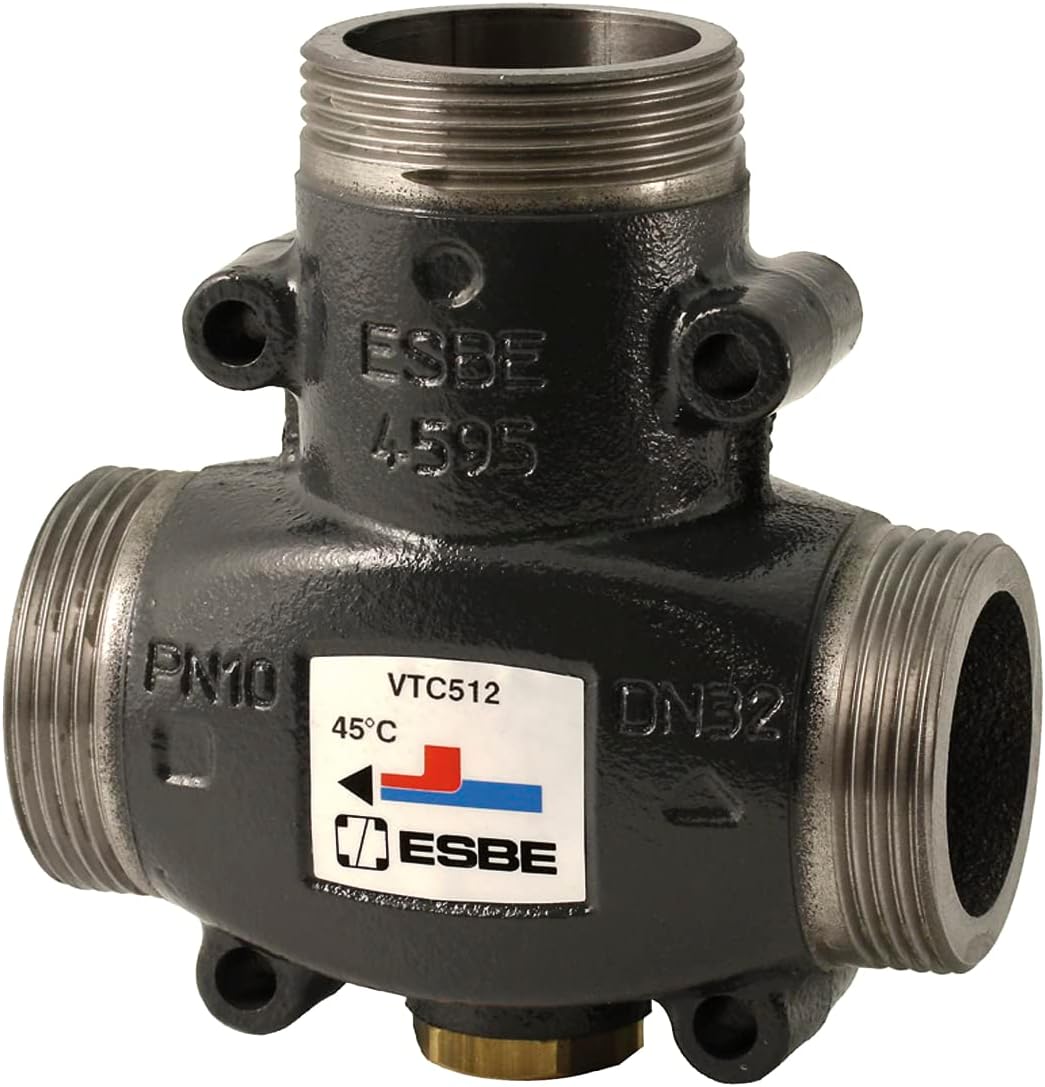
Image: The ESBE VTC512 DN25 thermal loading valve, a black, three-way valve with threaded connections and a label indicating 'VTC512 45°C ESBE'.
2. Produktet er slutview
The ESBE VTC512 DN25 valve is a crucial component for optimizing heating systems. Its integrated thermostat ensures precise temperature control, contributing to the longevity and efficiency of your boiler.
Nøglefunktioner:
- Boiler Protection: Shields the boiler from low return water temperatures.
- Forbedret effektivitet: Promotes higher boiler efficiency by maintaining stable operating conditions.
- Forlænget levetid: Reduces tar formation and corrosion, prolonging the boiler's service life.
- Enkel installation: Designed for easy setup with two connections, eliminating the need for a separate bypass regulating valve.
- Integreret termostat: Automatically regulates water temperature for optimal performance.
3. Specifikationer
| Specifikation | Værdi |
|---|---|
| Fabrikant | ESBE |
| Model reference | 51021500 |
| Produktmål (L x B x H) | 12.7 x 11.2 x 7.7 cm |
| Vægt | 858 gram |
| Nominel diameter (DN) | 25 |
| Åbningstemperatur | 50 °C |
| Tilslutningstype | External thread G 1¼" |
| Farve | Sort |
4. Installationsvejledning (opsætning)
Proper installation is crucial for the optimal performance and longevity of your ESBE VTC512 valve. Always ensure the heating system is depressurized and cooled before commencing any installation work.
Monteringsmuligheder:
- Return Line to Boiler: The valve can be mounted on the return line to the boiler. Available opening temperatures include 50°C, 55°C, 60°C, 65°C, or 70°C. This option is generally recommended for simplified pipe layout.
- Inlet to Storage Tank: Alternatively, the valve can be mounted on the inlet to the storage tank, typically with a 70°C opening temperature.
Generelle installationstrin:
- Forberedelse: Ensure the heating system is completely shut down, depressurized, and drained if necessary.
- Placering: Identify the correct mounting position based on your system design and the desired opening temperature. The valve's function is independent of its installation position.
- Forbindelse: Connect the valve using the G 1¼" external threads. Ensure all connections are properly sealed to prevent leaks.
- Strømningsretning: Observe the flow direction markings on the valve. The integrated thermostat will open connector A when the mixed water temperature at inlet AB drops below the set opening temperature (e.g., 50°C). Port B will close completely when the temperature at connector A exceeds the set opening temperature by 10°C.
- System Refill & Test: After installation, refill the system, bleed air, and carefully check for any leaks. Monitor the system operation to ensure the valve functions as expected.
For detailed piping diagrams and specific system configurations, refer to your boiler manufacturer's guidelines or consult a qualified HVAC professional.
5. Driftsprincipper
The ESBE VTC512 is a thermostatic mixing valve that automatically controls the water flow to maintain a high return temperature to the boiler. This prevents thermal shock and condensation, which are detrimental to boiler health.
Sådan virker det:
- Kold start: During a cold start, the valve directs hot water from the boiler's flow directly back to the boiler's return (bypassing the load). This rapidly raises the boiler's internal temperature to the set point (e.g., 50°C).
- Mixing Phase: As the boiler return temperature approaches the set point, the valve gradually opens the connection to the load (e.g., storage tank or heating circuit) while simultaneously reducing the bypass flow. This ensures a continuous, stable return temperature to the boiler.
- Fuld drift: Once the system is fully operational and the return temperature is consistently above the set point, the valve will be fully open to the load, allowing the boiler to efficiently heat the system while still protecting it from sudden drops in return temperature.
6. Vedligeholdelse
The ESBE VTC500 series valves are designed for reliability and typically require minimal maintenance under normal operating conditions. However, periodic checks can help ensure continued optimal performance.
Anbefalet vedligeholdelse:
- Visuel inspektion: Regularly inspect the valve and its connections for any signs of leaks, corrosion, or physical damage.
- Systemets vandkvalitet: Ensure that the heating system's water quality is maintained according to boiler manufacturer recommendations. Poor water quality can lead to scale buildup or sludge, potentially affecting valve operation.
- Rensning: If the system water is known to be problematic, periodic flushing of the system might be beneficial. The valve itself does not typically require internal cleaning.
- Professionel service: In case of persistent issues or suspected malfunction, it is recommended to consult a qualified HVAC technician. Do not attempt to disassemble the valve unless you are a trained professional.
7. Fejlfinding
This section provides guidance on common issues you might encounter with your ESBE VTC512 valve. For complex problems, always consult a qualified technician.
| Problem | Mulig årsag | Løsning |
|---|---|---|
| Boiler return temperature consistently too low | Valve not opening correctly to bypass, or thermostat malfunction. Blockage in the bypass circuit. | Verify correct installation and flow direction. Check for debris or blockages. If issues persist, the thermostatic element may need inspection by a professional. |
| System not heating efficiently (e.g., storage tank not reaching temperature) | Valve not opening correctly to the load, or set temperature is too high for the application. | Ensure the valve's set opening temperature is appropriate for your system. Check for any obstructions preventing the valve from fully opening to the load. |
| Leaks from valve connections | Improperly tightened connections, damaged seals, or faulty threads. | Carefully tighten all connections. Inspect sealing materials (e.g., PTFE tape, hemp) and replace if damaged. If the valve body is cracked, it must be replaced. |
| Valve appears stuck or unresponsive | Debris or scale buildup inside the valve. Thermostatic element failure. | Flush the system to remove debris. If the problem persists, professional inspection and potential replacement of the thermostatic element or the entire valve may be necessary. |


