
ERC050RG
Brake Master Cylinder User Manual
Model: ERC050RG | Brand: Generic
1. Introduktion og produktoversigtview
This manual provides essential information for the installation, operation, maintenance, and troubleshooting of the Generic Brake Master Cylinder, specifically designed for Yale Forklift Truck model ERC050RG. Please read this manual thoroughly before installation and use to ensure proper function and safety.
Produktegenskaber:
- Brand New component, ensuring optimal performance and longevity.
- Direct replacement part for Yale Forklift Truck ERC050RG.
- Engineered for reliable braking system function.
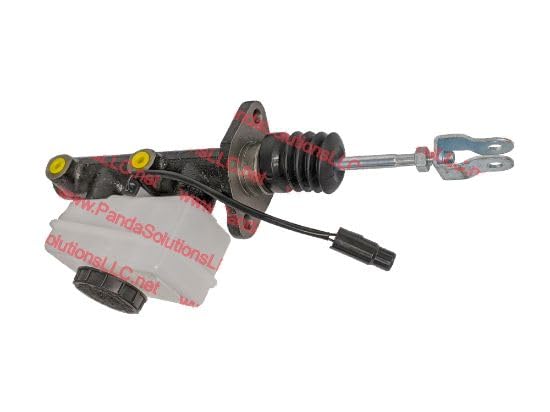
Figur 1: Overview of the Brake Master Cylinder. This image displays the complete assembly of the brake master cylinder, including the fluid reservoir, main body, and pushrod mechanism. The component is black with a translucent white reservoir and yellow caps on the fluid ports.
2. Opsætning og installation
Proper installation is crucial for the safe and effective operation of the brake system. It is highly recommended that installation be performed by a qualified technician with experience in forklift maintenance.
Sikkerhedsforanstaltninger:
- Brug altid passende personlige værnemidler (PPE), herunder sikkerhedsbriller og handsker.
- Ensure the forklift is turned off, parked on a level surface, and secured against movement before beginning any work.
- Refer to the forklift's specific service manual for detailed instructions on brake system bleeding and fluid specifications.
- Use only new, clean brake fluid of the recommended type.
Installationstrin (generel vejledning):
- Forberedelse: Disconnect the forklift battery. Place a drain pan under the master cylinder to catch old brake fluid.
- Væskedræning: Carefully disconnect the brake lines from the old master cylinder and allow fluid to drain.
- Fjernelse: Unbolt and remove the old master cylinder from its mounting location.
- Installation af ny enhed: Mount the new Generic Brake Master Cylinder, ensuring all mounting bolts are securely fastened to the manufacturer's torque specifications.
- Linjeforbindelse: Reconnect the brake lines to the new master cylinder. Ensure connections are tight to prevent leaks.
- Væskefyldning: Fill the reservoir with new, clean brake fluid to the MAX line.
- Udluftning af systemet: Bleed the entire brake system according to the forklift manufacturer's instructions to remove all air. This is a critical step for proper brake function.
- Afsluttende kontrol: Inspect for any leaks around the master cylinder and brake lines. Test the brake pedal for firm feel and proper operation before returning the forklift to service.
3. Betjening
The brake master cylinder is a critical component of your forklift's hydraulic braking system. When the brake pedal is depressed, the master cylinder converts the mechanical force into hydraulic pressure, which is then transmitted through the brake lines to the wheel cylinders or calipers, engaging the brakes.
Ensure the brake pedal operates smoothly and provides consistent resistance. Any sponginess or excessive travel may indicate air in the system or a fluid leak, requiring immediate attention.
4. Vedligeholdelse
Regular maintenance of your brake system, including the master cylinder, is essential for safety and longevity. Perform the following checks periodically:
- Bremsevæskeniveau: Check the brake fluid level in the reservoir regularly (e.g., daily or weekly, depending on usage). The level should be between the MIN and MAX marks. A consistently low fluid level may indicate a leak in the system.
- Fluid Condition: Observe the color and clarity of the brake fluid. If it appears dark, cloudy, or contains debris, it may be contaminated and require flushing and replacement.
- Lækageinspektion: Visually inspect the master cylinder, brake lines, and connections for any signs of fluid leaks. Look for damp spots or drips.
- Bremsepedalfølelse: Pay attention to the feel of the brake pedal. It should be firm and consistent. A soft, spongy, or excessively low pedal indicates a potential issue.
- Reservoirdæksel: Ensure the reservoir cap is securely tightened to prevent contamination and moisture absorption by the brake fluid.
Consult your forklift's maintenance schedule for recommended brake fluid change intervals.
5. Fejlfinding
This section outlines common issues that may arise with the brake system and potential solutions. Always prioritize safety and consult a qualified technician if you are unsure about any repair.
| Problem | Mulig årsag | Løsning |
|---|---|---|
| Soft or Spongy Brake Pedal | Air in the brake lines; low brake fluid level; faulty master cylinder. | Bleed the brake system; check and refill brake fluid; inspect master cylinder for internal leaks. |
| Brake Pedal Goes to Floor | Severe fluid leak; master cylinder failure. | Immediately inspect for leaks and repair; replace master cylinder if internal failure is confirmed. |
| Brake Fluid Leaks | Loose connections; damaged brake lines; faulty master cylinder seals. | Tighten connections; replace damaged lines; replace master cylinder if seals are compromised. |
| Brakes Dragging or Not Releasing | Master cylinder not returning fully; seized calipers/wheel cylinders. | Inspect master cylinder pushrod and pedal linkage; check and service calipers/wheel cylinders. |
6. Specifikationer
Key specifications for the Brake Master Cylinder:
| Attribut | Værdi |
|---|---|
| ASIN | B0CYV9L9LK |
| Fabrikant | Eftermarked |
| Dato først tilgængelig | 22. marts 2024 |
| Kompatibilitet | Yale Forklift Truck ERC050RG |
7. Garanti og support
For any questions regarding this product, including warranty information or technical support, please contact the seller or manufacturer directly. When seeking support, it is highly recommended to provide the forklift serial number to assist in accurate diagnosis and part verification.
This product is supplied as a brand new component. Please retain your proof of purchase for any warranty claims.
Ask a question about this manual
Ask about setup, troubleshooting, compatibility, parts, safety, or missing instructions. Manuals+ will review the question and use this page’s manual context to help answer it.