
1. Introduktion
This manual provides comprehensive instructions for the DORHEA ESP32 D1 Mini Development Board. This board is a compact and powerful solution for Internet of Things (IoT) projects, integrating Wi-Fi and Bluetooth capabilities. It is designed for developers and hobbyists to quickly prototype and deploy embedded applications.
2. Produktet er slutview
The DORHEA ESP32 D1 Mini Development Board features the ESP32-WROOM-32 module, offering dual-core processing, integrated Wi-Fi (802.11b/n), and Bluetooth connectivity. It maintains the compact form factor of the WeMos D1 Mini series, making it compatible with a wide range of existing shields and accessories. The board includes a CP2104 USB-to-UART bridge for easy programming and serial communication.

Figure 2.1: DORHEA ESP32 D1 Mini Development Board with pin headers.
Nøglefunktioner omfatter:
- Integrated ESP32-WROOM-32 module.
- Wi-Fi (802.11b/n) and Bluetooth (Classic and BLE) connectivity.
- Compact D1 Mini form factor.
- CP2104 USB-to-UART bridge for programming.
- Multiple GPIO pins for various applications.

Figur 2.2: Vinklet view of the ESP32 D1 Mini board.
3. Opsætningsvejledning
Follow these steps to set up your DORHEA ESP32 D1 Mini Development Board:
3.1. Hardwareforbindelse
- Attach Pin Headers: Solder the included pin headers to the board if you intend to use it with a breadboard or custom circuitry. Ensure correct orientation.
- Tilslut til computer: Use a Micro-USB cable to connect the ESP32 D1 Mini board to your computer. The board will draw power from the USB port.
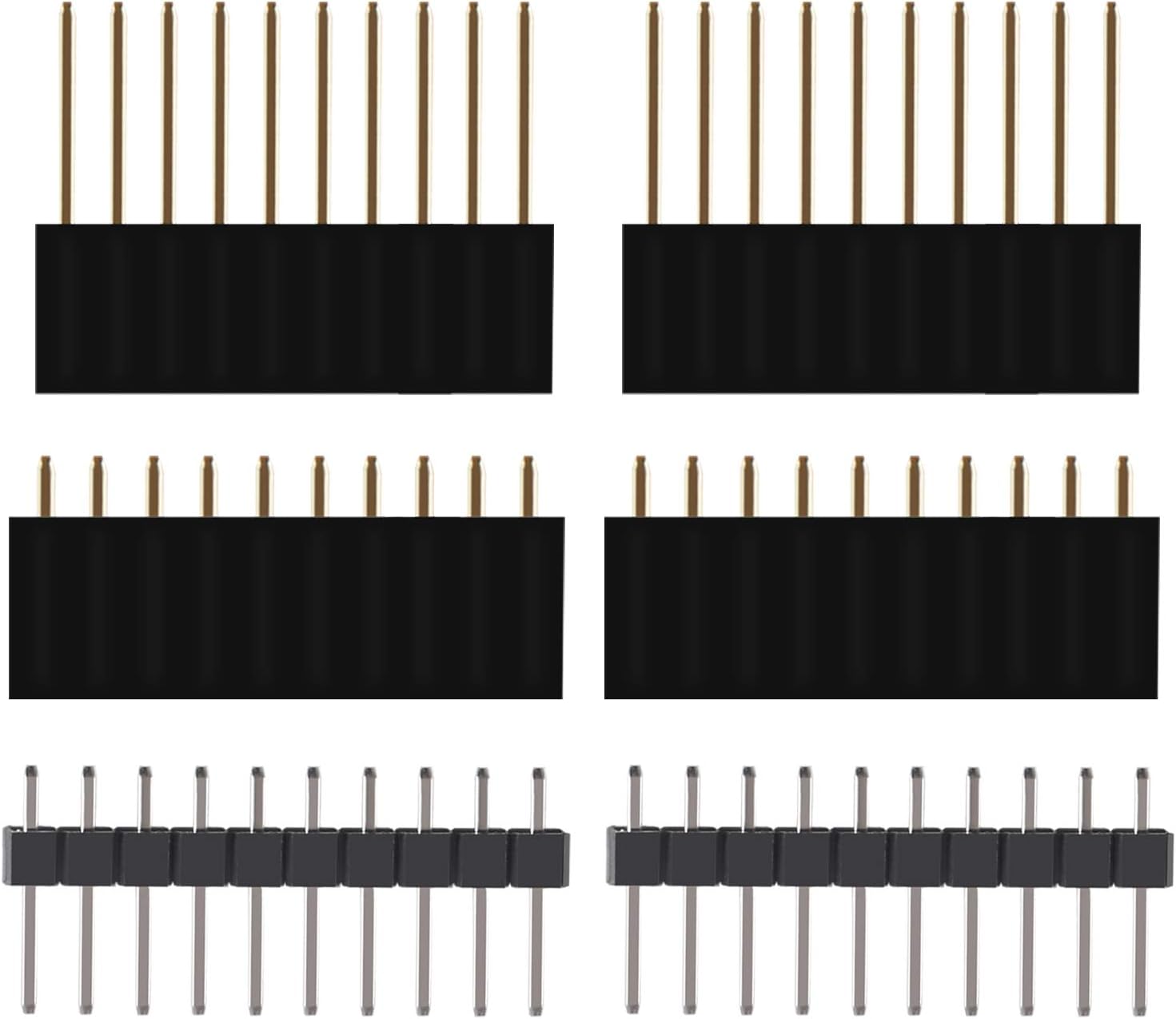
Figure 3.1: Included pin headers.
3.2. Driver installation
The board uses a CP2104 USB-to-UART bridge. Most modern operating systems will install the necessary drivers automatically. If not, you may need to download and install the CP2104 drivers from Silicon Labs' official webwebsted.
3.3. Softwareopsætning (Arduino IDE)
The Arduino IDE is a popular choice for programming ESP32 boards:
- Installer Arduino IDE: Download og installer den nyeste version af Arduino IDE fra den officielle Arduino webwebsted.
- Tilføj ESP32-kortunderstøttelse:
- Åbn Arduino IDE, gå til File > Præferencer.
- I "Yderligere bestyrelsesadministrator" URLs"-feltet, tilføj:
https://raw.githubusercontent.com/espressif/arduino-esp32/gh-pages/package_esp32_index.json - Gå til Tools > Board > Board Manager.... Søg efter "ESP32" og installer pakken "esp32 by Espressif Systems".
- Vælg bestyrelse: Gå til Værktøjer > Board > ESP32 Arduino and select "ESP32 Dev Module" or a similar generic ESP32 board.
- Vælg COM-port: Gå til Værktøjer > Port and select the COM port corresponding to your ESP32 board.

Figure 3.2: ESP32 D1 Mini Pinout Diagram.
4. Betjeningsvejledning
Once your development environment is set up, you can begin programming and operating your ESP32 D1 Mini board.
4.1. Uploading Your First Sketch
- Åbn en exampdet: I Arduino IDE skal du gå til File > Eksamples > 01.Grundlæggende > Blink.
- Compile and Upload: Click the "Upload" button (right arrow icon) in the Arduino IDE. The IDE will compile the code and upload it to your ESP32 board. During upload, you might need to press and hold the STØVLE button on the board if the upload fails, then release it once the upload starts.
- Observere: The built-in LED on the board should start blinking, indicating successful operation.
4.2. Using Wi-Fi and Bluetooth
The ESP32's primary strength lies in its wireless capabilities. You can use the Arduino Wi-Fi and Bluetooth libraries to connect to networks, create access points, or communicate with other Bluetooth devices. Refer to the extensive online documentation and examples for specific implementations.
4.3. Brug af GPIO-ben
The board provides numerous General Purpose Input/Output (GPIO) pins. These pins can be configured as digital inputs, digital outputs, analog inputs, or for various peripheral functions like I2C, SPI, UART, and PWM. Consult the pinout diagram (Figure 3.2) and ESP32 documentation for detailed pin functionalities.
5. Vedligeholdelse
Proper maintenance ensures the longevity and reliable operation of your ESP32 D1 Mini board.
- Hold rent: Rengør regelmæssigt pladen med en blød, tør børste for at fjerne støv og snavs. Undgå at bruge væsker.
- Statisk beskyttelse: Handle the board by its edges and avoid touching the components directly to prevent damage from electrostatic discharge (ESD). Store it in an anti-static bag when not in use.
- Miljøforhold: Operate and store the board in a dry environment, away from extreme temperatures, humidity, and direct sunlight.
- Strømforsyning: Always use a stable 5V power supply via the Micro-USB port. Avoid over-voltage- eller omvendt polaritetsforbindelser.
6. Fejlfinding
Her er nogle almindelige problemer og deres løsninger:
- Kort ikke fundet af computer:
- Ensure the Micro-USB cable is fully inserted and functional.
- Verify CP2104 drivers are correctly installed (check Device Manager on Windows or
ls /dev/tty*on Linux/macOS). - Prøv en anden USB-port eller computer.
- Upload Errors (Failed to connect to ESP32):
- Make sure the correct COM port is selected in the Arduino IDE.
- Tryk og hold på STØVLE button on the board, then click "Upload" in the IDE. Release the STØVLE button once the upload process starts.
- Ensure the board is powered correctly.
- Problemer med Wi-Fi-forbindelse:
- Double-check Wi-Fi SSID and password in your code.
- Ensure the Wi-Fi network is 2.4 GHz, as ESP32 does not support 5 GHz Wi-Fi.
- Check the distance to the Wi-Fi router and potential interference.
- Uventet adfærd/nedbrud:
- Review your code for logical errors or memory issues.
- Ensure adequate power supply, especially when driving external components.
- Use the Serial Monitor in the Arduino IDE to view debug messages from your code.
For further assistance, consult online ESP32 communities and documentation resources.
7. Specifikationer
| Feature | Specifikation |
|---|---|
| Processor | Espressif ESP32, Dual-core 240 MHz |
| VÆDDER | LPDDR3, 4 MB |
| Trådløs type | 802.11b/n Wi-Fi, Bluetooth |
| Operativsystemsupport | FreeRTOS, Linux |
| Forbindelse | Micro-USB (for power and data) |
| Dimensioner (pakke) | 5.24 x 3.98 x 0.75 tommer |
| Varens vægt | 2.22 ounce |
| Modelnavn | ESP32 D1 Mini |
| Fabrikant | DORHEA |
8. Garanti og support
DORHEA products are manufactured to high-quality standards. This product is covered by the standard manufacturer's warranty against defects in materials and workmanship. Please refer to your purchase documentation for specific warranty terms and duration.
For technical support, troubleshooting assistance beyond this manual, or warranty claims, please contact DORHEA customer service through the platform where the product was purchased. Provide your order number and a detailed description of the issue for prompt assistance.