
Indledning
The SpiderLath Fiberglass Lath is an advanced, non-rusting alternative to traditional metal lath, designed for stucco and stone veneer applications. This product offers enhanced strength and ease of installation, making it suitable for various construction projects. It is engineered to be self-furring, ensuring proper spacing for material application as required by building codes.
Nøglefunktioner omfatter:
- Rustfri: Constructed from fiberglass, eliminating rust concerns.
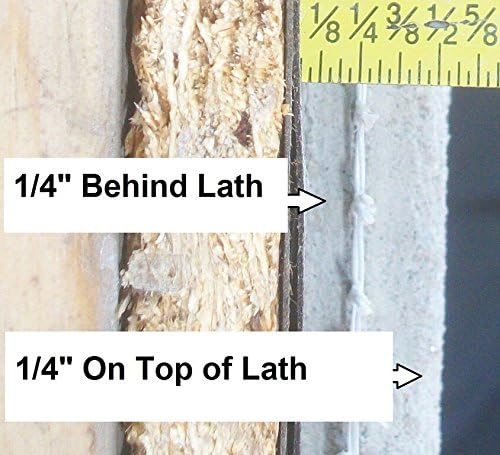
- Self-Furring: Designed to provide the code-required 1/4 inch space both behind and in front of the lath.
- Enhanced Strength: Offers six times the strength of standard metal lath.
- Installationseffektivitet: Equivalent to 18 sheets of metal lath, potentially reducing installation time and effort.
- Code Approved: Complies with ASCE, ICC, IAPMO, and ANSI building codes.
Opsætning og installation
Proper installation of SpiderLath Fiberglass Lath is crucial for optimal performance and durability. Follow these guidelines for effective setup.
Forberedelse
- Ensure the substrate is clean, dry, and structurally sound.
- Unroll the SpiderLath carefully. The material is flexible and easy to handle.
- Cut the lath to the desired size using standard utility knives or shears. Its fiberglass composition makes it significantly easier to cut than metal lath.

Image: A roll of SpiderLath Fiberglass Lath, showcasing its yellow and white mesh structure.
Vedhæftet fil
- Attach the lath to the substrate using appropriate fasteners (e.g., staples, screws with washers) suitable for your wall system.
- Ensure the lath is pulled taut and flat against the wall, allowing the self-furring design to create the necessary 1/4 inch space.
- Overlap adjacent sheets of lath according to local building codes and manufacturer recommendations, typically 2 inches at vertical joints and 6 inches at horizontal joints.

Image: SpiderLath Fiberglass Lath properly installed on a wall, providing a base for stucco or stone veneer.

Billede: En detaljeret view illustrating the self-furring mechanism, showing the 1/4 inch spacing behind and on top of the lath.
Håndtering
- Selvom det er holdbart, undgå overdreven bøjning eller krumningasing that could compromise the mesh integrity.
- Store rolls in a dry, protected area away from direct sunlight and extreme temperatures.

Image: A person carrying a roll of SpiderLath, demonstrating its manageable weight and form factor.
Operating (Application) Instructions
Once SpiderLath is securely installed, it provides an ideal base for various finishes, including stucco and stone veneer. The self-furring design ensures proper embedment of the scratch coat.
Stucco Application
- Apply the scratch coat of stucco directly over the installed SpiderLath. The mesh provides excellent keying for the material.
- Ensure the scratch coat fully embeds the lath and fills the 1/4 inch furring space.
- Follow standard stucco application practices for subsequent coats, curing, and finishing.
Billede: Et nærbillede view of a scratch coat of stucco applied over the SpiderLath, demonstrating proper material embedment.
Stone Veneer Application
- For stone veneer, apply a scratch coat of mortar over the lath, ensuring full coverage and embedment.
- Once the scratch coat has cured, apply the stone veneer units using appropriate mortar, pressing them firmly into the base.
- The robust nature of SpiderLath provides a strong foundation for heavy stone applications.

Billede: En eksample of a finished exterior wall with stone veneer successfully applied over SpiderLath.
Opretholdelse
SpiderLath Fiberglass Lath requires minimal maintenance due to its inherent properties.
- Rustfri: Unlike metal lath, fiberglass does not rust, eliminating concerns about corrosion and staining of the finished surface.
- Holdbarhed: Once embedded in stucco or mortar, the lath contributes to the long-term stability and crack resistance of the wall system.
- No specific ongoing maintenance is required for the lath itself after installation and finishing. Maintenance of the finished surface (stucco, stone veneer) should follow the recommendations for those materials.
Fejlfinding
Most issues related to lath installation can be avoided by following proper preparation and application techniques. If you encounter problems, consider the following:
- Lath Not Lying Flat: Ensure the substrate is even. If the lath is creased, it may not lie flat. Remove and replace severely creased sections.
- Inadequate Furring Space: Verify that the lath is installed correctly, allowing the self-furring elements to create the 1/4 inch gap. Improper fastening or substrate irregularities can affect this.
- Poor Adhesion of Stucco/Mortar: This is typically related to the mix consistency of the stucco/mortar or improper application, not the lath itself. Ensure the scratch coat fully embeds the lath.
- Cracking in Finish Coat: While SpiderLath enhances crack resistance, cracking can still occur due to structural movement, improper curing of the finish material, or extreme temperature fluctuations. Consult a qualified professional for structural issues.
For complex issues or concerns not addressed here, please contact SpiderLath customer support or a certified building professional.
Specifikationer
| Feature | Detalje |
|---|---|
| Modelnummer | SLE14-300 |
| Materiale | Glasfiber |
| Dækningsområde | 300 kvm. |
| Produktmål (emballeret) | 48 x 16 x 16 tommer |
| Varens vægt | 20 pund |
| Furring Depth | 1/4 inch behind and in front (Self-Furring) |
| Styrke | 6 times stronger than standard metal lath |
| Building Code Approvals | ASCE, ICC, IAPMO, ANSI |
Garantioplysninger
Specific warranty details for SpiderLath Fiberglass Lath are not provided in this document. For information regarding product warranties, please contact the manufacturer directly. It is recommended to retain your purchase receipt for any warranty claims.
Kundesupport
For further assistance, technical questions, or support regarding your SpiderLath Fiberglass Lath, please contact the manufacturer:
Fabrikant: SpiderLath
Please refer to the official SpiderLath webwebstedet eller produktemballagen for de mest aktuelle kontaktoplysninger.